Claude Ultraplan vs Superpowers: I Found a WINNER and It's Not Even Close
Through a side-by-side demo of planning a CLI release pipeline, this video shows that Claude's cloud-based Ultra Plan trades thoroughness and token efficiency for portability, while the local Superpowers plugin produces a far more detailed test-driven plan at higher token cost.
Better Stack8 minTranscript found
Quick learning frame
Read this before watching.
Creative automation accelerates production while keeping human taste in brief, source selection, generation, editing, and critique.
New playlist item from Better Stack; queued for transcript-backed review, topic mapping, and a practical learning artifact.
Skill you build: Choosing between cloud Ultra Plan and the local Superpowers plugin for AI-assisted feature planning based on workflow context, plan depth, and token budget.
Watch for the shift from claim to mechanism. The learning value is the point where the transcript reveals a repeatable action, tool boundary, context move, review habit, or artifact.
Concept diagram
Where this video fits.
01Brief
02Source material
03Generation
04Selection
05Edit
06Taste review
07Reusable recipe
Deep lesson
Turn this video into working knowledge.
1,624 cleaned transcript words reviewed across 444 timed caption segments.
Thesis
Claude Ultraplan vs Superpowers: I Found a WINNER and It's Not Even Close teaches a practical creative automation move: Through a side-by-side demo of planning a CLI release pipeline, this video shows that Claude's cloud-based Ultra Plan trades thoroughness and token efficiency for portability, while the local Superpowers plugin produces a far more detailed test-driven plan at higher token cost.
The goal is not to remember the video. The goal is to extract the operating principle, tie it to timestamped evidence, test how far the claim transfers, and make something reusable.
1:00
How Ultra Plan works
“interested, but this plan is to focus on building a release pipeline. I'll start with using the new Ultra Plan feature and then compare the plan. So, in order to use Ultra Plan, you need to have at...”
Ultra Plan moves planning off the CLI to Claude Code on the web: it spins up a cloud container, clones your GitHub repo, runs bash to read context, then asks clarifying questions before producing a plan you can implement in the cloud or locally. Note the hard prerequisite that your repo must be on GitHub, then trigger Ultra Plan yourself with the /ultraplan command (or by typing 'ultraplan') and watch the container set up and clone steps.
2:00
Watch token usage
“set up a cloud container and then clones the repo. I forgot to mention, to use Ultra Plan, your project's repo needs to be on GitHub, since it creates a cloud session and needs to clone the repo...”
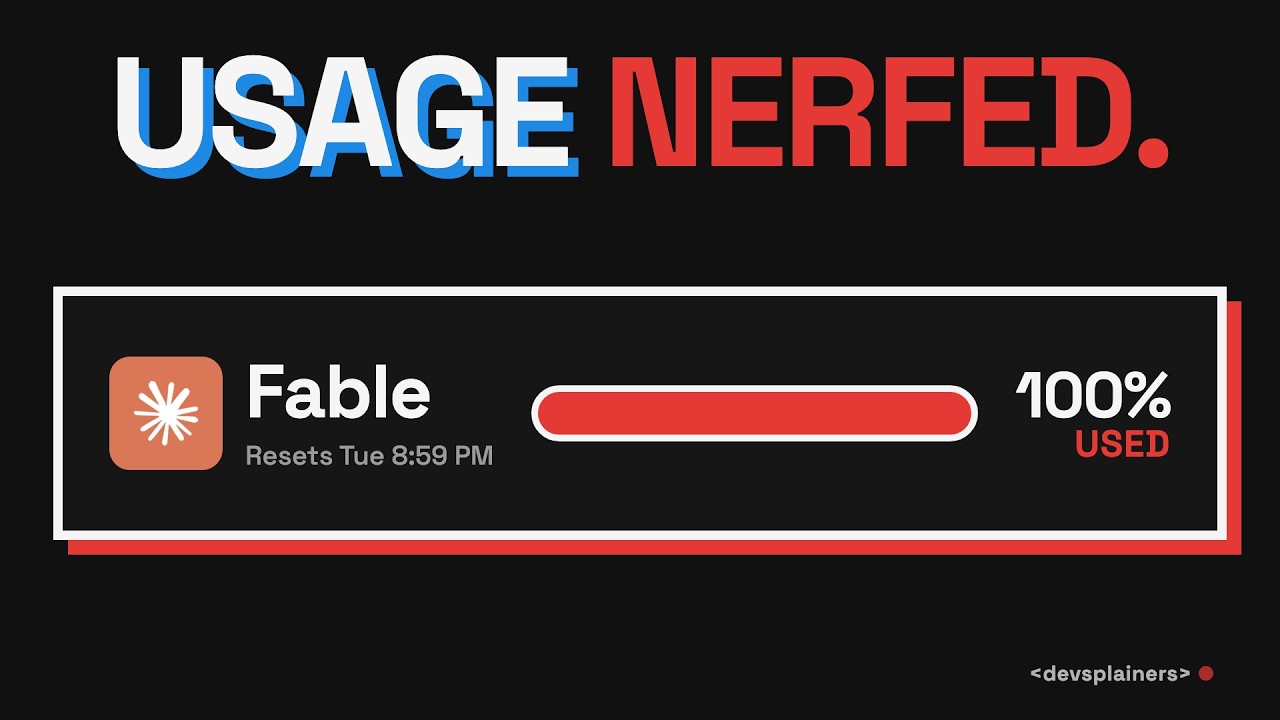
Planning consumes real budget: usage starts at 0%, a failed run plus first plan reached 19%, and revising the plan pushed it to 37% — roughly 33% of usage for one cloud plan, a cost worth tracking before committing. Check your usage percentage before and after running a plan so you can quantify what a single planning pass actually costs against your subscription limit.
6:52
Superpowers' edge
“and creating PRs as long as I've installed the Claude app on my repo, which I forgot to do for this demo. Oops. But, if I do choose to work locally, which I'm doing 90% of the time,...”
Superpowers asks six clarifying questions (versus Ultra Plan's three), runs two phases (design then implementation), and writes tests first — producing an ~833-line test-driven plan versus Ultra Plan's ~195 lines, at the cost of ~75k tokens locally. Run the same feature prompt through Superpowers and compare plan length, question count, and whether test cases are generated before implementation code.
01
Brief
Start with this video's job: Through a side-by-side demo of planning a CLI release pipeline, this video shows that Claude's cloud-based Ultra Plan trades thoroughness and token efficiency for portability, while the local Superpowers plugin produces a far more detailed test-driven plan at higher token cost. Treat "Brief" as the outcome you are trying to make visible, not a topic label. Anchor it to 1:00, where the video says: “interested, but this plan is to focus on building a release pipeline. I'll start with using the new Ultra Plan feature and then compare the plan. So, in order to use Ultra Plan, you need to have at...”
02
Source material
Use "Source material" to locate the part of the creative automation mechanism the video is demonstrating. Ask what changes in your real setup if this claim is true. Anchor it to 2:00, where the video says: “set up a cloud container and then clones the repo. I forgot to mention, to use Ultra Plan, your project's repo needs to be on GitHub, since it creates a cloud session and needs to clone the repo...”
03
Generation
Turn "Generation" into the reusable artifact for this lesson: A creative production board with source inputs, prompt recipe, selection criteria, edit pass, and taste-review checkpoints. This is where watching becomes something you can inspect and reuse.
04
Selection
Use "Selection" as the application surface. Decide whether the idea touches a browser flow, a local file, a model choice, a source document, a UI, or a review step.
05
Edit
Use "Edit" to prove the lesson. The evidence should connect back to the video title, transcript anchors, and a concrete output, not a generic best-practice claim.
06
Taste review
Use "Taste review" to carry the idea forward: save the prompt, checklist, diagram, or operating rule that would make the next agent run better.
07
Reusable recipe
Connect "Reusable recipe" to Claude Ultraplan vs Superpowers: I Found a WINNER and It's Not Even Close by naming the claim, the evidence, and the artifact it should produce.
Example
Source-backed artifact packet
Convert the video into a scoped artifact request that includes the transcript claim, mechanism, acceptance criteria, and proof. The output should be a creative production board with source inputs, prompt recipe, selection criteria, edit pass, and taste-review checkpoints..
Example
Creative automation proof brief
Separate what the speaker claims, what the demo actually proves, and what still needs outside verification before you adopt the creative automation pattern.
Example
Teach-back module
Transform the lesson into a definition, a Brief -> Source material -> Generation -> Selection -> Edit -> Taste review -> Reusable recipe diagram, one misconception, one practice exercise, and a check-for-understanding question.
Do not learn it wrong
Treating the title as the lesson without checking what the transcript actually says.
mistaking novelty for quality
no source/brief discipline
shipping generated media without taste review
Letting the lesson drift into generic content advice.
Letting the lesson drift into tool hype.
Letting the lesson drift into creative output without selection criteria.
Do not count this as learned until these are true.
01
State the transcript-backed claim in your own words: Through a side-by-side demo of planning a CLI release pipeline, this video shows that Claude's cloud-based Ultra Plan trades thoroughness and token efficiency for portability, while the local Superpowers plugin produces a far more detailed test-driven plan at higher token cost.
02
Explain the practical stakes without hype: New playlist item from Better Stack; queued for transcript-backed review, topic mapping, and a practical learning artifact.
03
Map the idea onto the Brief -> Source material -> Generation -> Selection -> Edit -> Taste review -> Reusable recipe sequence and name the weakest link.
04
Produce the artifact and include the evidence that proves it: A creative production board with source inputs, prompt recipe, selection criteria, edit pass, and taste-review checkpoints.
Put it into practice
Give this grounded prompt to Codex or Claude after watching.
You are helping me turn one specific YouTube video into real, durable learning.

Source video:
- Title: Claude Ultraplan vs Superpowers: I Found a WINNER and It's Not Even Close
- URL: https://www.youtube.com/watch?v=-qFf7v2399E
- Topic: Creative Automation
- My current learning frame: Pick one feature in a GitHub-hosted repo and plan it twice — once with Ultra Plan and once with Superpowers — recording question count, plan line length, token usage, and presence of test-first tasks to decide which fits your working style.
- Why this matters: New playlist item from Better Stack; queued for transcript-backed review, topic mapping, and a practical learning artifact.

Transcript anchors from this exact video:
- 1:00 / Evidence 1: "interested, but this plan is to focus on building a release pipeline. I'll start with using the new Ultra Plan feature and then compare the plan. So, in order to use Ultra Plan, you need to have at..."
- 2:00 / Evidence 2: "set up a cloud container and then clones the repo. I forgot to mention, to use Ultra Plan, your project's repo needs to be on GitHub, since it creates a cloud session and needs to clone the repo..."
- 4:18 / Evidence 3: "GitHub credentials, if I had a private repo, it'll be able to pull it and add it to the sandbox for creating a plan. But, because the scope of this demo was just to review the plan, we're..."
- 6:52 / Evidence 4: "and creating PRs as long as I've installed the Claude app on my repo, which I forgot to do for this demo. Oops. But, if I do choose to work locally, which I'm doing 90% of the time,..."

Video-aware target:
- Prompt lane: Creative automation
- Mechanism to extract: Extract the creative production loop, especially where the human keeps taste, selection, and final judgment.
- Artifact to produce: A creative production board with source inputs, prompt recipe, selection criteria, edit pass, and taste-review checkpoints.
- Artifact must include: brief; source inputs; generation recipe; selection criteria; edit/review checkpoint

Your task:
1. Use the transcript anchors above as the primary source packet. If you add outside context, label it clearly as outside context and keep it secondary.
2. Create a source-check table with columns: timestamp, claim, transcript support, what the demo proves, confidence, and what still needs verification.
3. Extract the actual teachable mechanism from the video: Extract the creative production loop, especially where the human keeps taste, selection, and final judgment. Do not invent claims that are not supported by the title, lesson frame, or transcript anchors.
4. Build a reusable learning artifact: A creative production board with source inputs, prompt recipe, selection criteria, edit pass, and taste-review checkpoints.
5. Include:
   - a plain-English definition of the core idea
   - a diagram or structured model using this sequence: Brief -> Source material -> Generation -> Selection -> Edit -> Taste review -> Reusable recipe
   - answers to these source questions: What asset is being produced? | What inputs and tools drive it? | Where does human taste intervene?
   - 3 concrete examples that apply the video idea to real agentic work, such as Claude-generated video campaign; image-to-site workflow; voice or video editing loop
   - 2 failure modes the video helps prevent, chosen from the transcript evidence and these likely risks: mistaking novelty for quality; no source/brief discipline; shipping generated media without taste review
   - a checklist for the next real workflow, focused on: brief, inputs, generation, selection, critique
   - one practical exercise with a clear done signal: Build one reusable creative recipe and define what would make the result rejectable.
6. Add a "learning transfer" section: what changes in my workflow tomorrow if I actually learned this?
7. Add a "source check" section that cites which transcript anchor supports each major takeaway.

Quality bar:
- Make this specific to "Claude Ultraplan vs Superpowers: I Found a WINNER and It's Not Even Close", not a generic Creative Automation essay.
- Anchor each creative step to transcript evidence about inputs, model/tool choices, iteration, editing, or critique.
- Prefer operational examples, failure modes, and reusable artifacts over broad definitions.
- Call out uncertainty instead of smoothing over weak evidence.
- Avoid these generic drifts: generic content advice; tool hype; creative output without selection criteria.
- If evidence is weak or missing, stop and say what transcript segment or timestamp needs review instead of guessing.
- Finish with a concise artifact I could paste into my learning app.
Misconceptions
What to stop believing.
Creative AI removes the need for taste.
It increases the need for taste because output volume explodes.
The best prompt is enough.
References, critique, iteration, and post-production matter just as much.
Practice studio
Learning only counts when you make something.
01
Transcript evidence map
Separate what the video actually says from what you already believe about the topic.
3 source-backed takeaways with timestamps, confidence, and a transfer note.02
One useful artifact
Apply the video to a real workflow and produce a creative production board with source inputs, prompt recipe, selection criteria, edit pass, and taste-review checkpoints..
A reusable artifact with a done signal and one verification step.03
Creative automation teach-back card
Explain the creative automation mechanism to someone who has not watched the video yet.
A 90-second explanation, one diagram, one example, and one misconception to avoid.
Recall check
Answer first, then reveal — without rewatching.
How does Ultra Plan produce a plan, and what hard prerequisite must your project meet?
By the numbers, how much of the presenter's token usage did a single Ultra Plan pass consume, and how did it climb?
What concrete differences make Superpowers the winner for local work, in question count, phases, and plan output?
Source shelf
Use the video as a doorway, then verify with primary sources.